

Blog
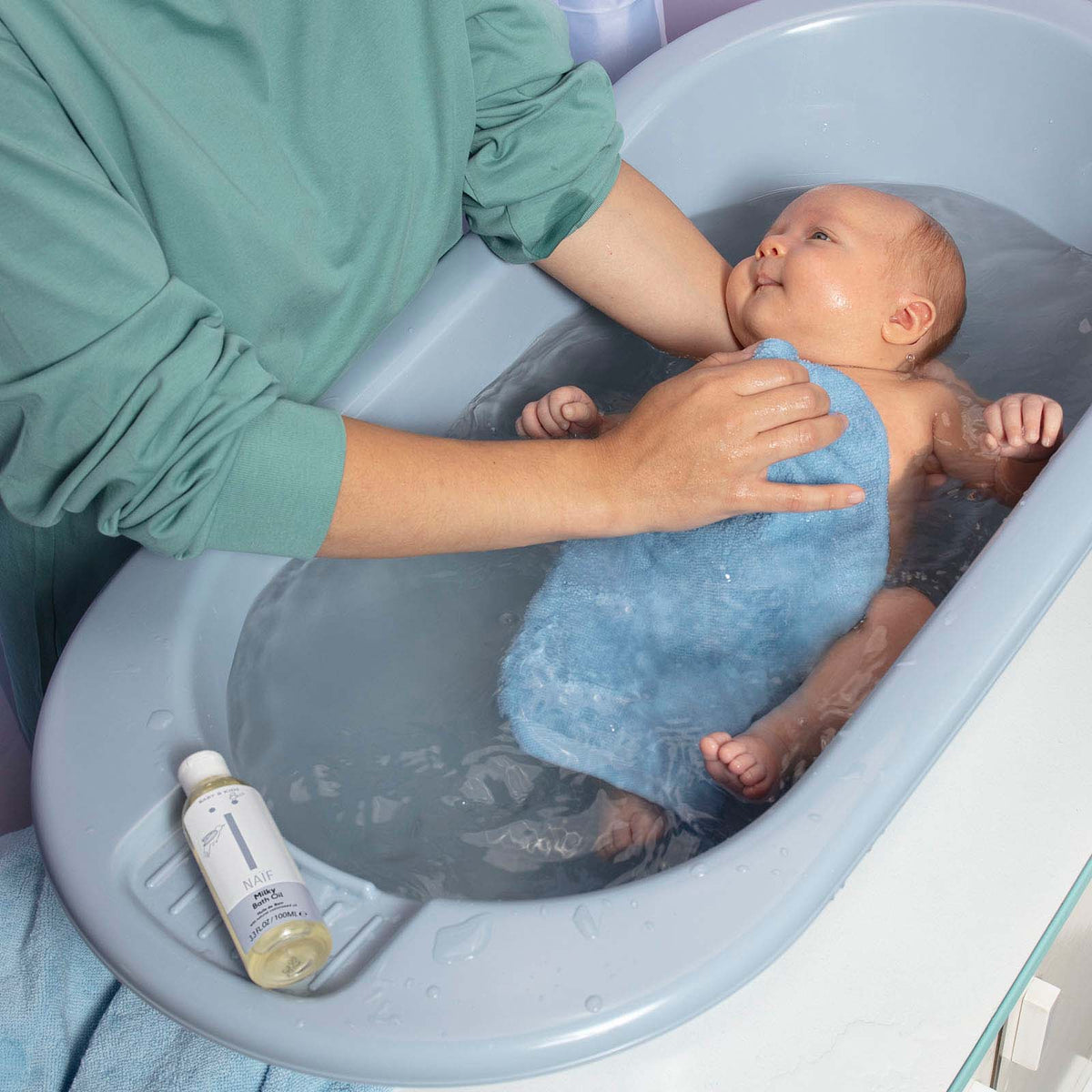

Does your baby have red spots or a rash? This is what it could be.
Skin rashes are common in babies and toddlers. Sometimes it's a sign of a childhood illness or allergy, but sometimes it's also harmless and there's nothing you can do about it. Does your little one suffer from red spots or a rash and are you curious what it could be? Read more below about what it could be and what you can do about it. Baby acne What is it? Between 0-8 months, many babies get small pimples on their face. It usually takes a few weeks or months before everything is gone. It's not contagious, doesn't itch and usually goes away on its own. How does it develop? It's not entirely clear how the pimples develop, but it's thought to be related to (male) hormones from the mother that stimulate the baby's sebaceous glands. Hormones are passed to the baby through the umbilical cord and can remain in your baby's system for a while. What to do? Leave the skin alone as much as possible. Keep the skin clean with lukewarm water and a mild fragrance-free body wash. Don't use greasy products or products with fragrance, as these can actually clog the pores. Diaper rash What is it? Diaper rash is common. You recognize it by the open, moist and red spots that develop in your baby's diaper area. How does it develop? Diaper rash occurs from wearing a diaper: the urine and feces in the diaper cause a change in the pH value of your baby's skin. Combined with the warm, humid environment of the diaper, this can lead to weak and irritated skin. What to do? Although this rash is annoying, fortunately there is a solution for it: zinc cream. A diaper cream with zinc oxide helps protect, cool and heal the skin. To prevent diaper rash, it's best to change the diaper immediately after urination or defecation, and keep the skin as clean and dry as possible at all times, a baby powder after changes can definitely help with prevention too. Also read here the tips for diaper rash from dermatologist Elodie Mendels. Heat rash What is it? Heat or heat rash is also called milaria in the medical world. It especially occurs during summer in babies and young children, on areas where the skin is directly exposed to the sun (think: face, neck) or where there is little air circulation and much friction such as the buttocks, groin or armpits. It itches and causes a prickling sensation. How does it develop? The rash develops because the heat and perspiration clog the sweat gland and the sweat cannot be discharged. Especially in young babies, these glands are sometimes not fully developed. What to do? The bumps will go away on their own once your baby is no longer so warm. In the meantime, you can apply a cold washcloth to the spots to provide cooling. To prevent it, you can dress your child lightly, provide plenty of fresh air and cooling on warm days and sit in the shade. Warm irritated spots can be treated with a zinc cream for cooling. Eczema What is it? About one in ten babies suffer from it: eczema. It's an inflammatory reaction of the skin and you recognize it by flaking, crusts, bumps, cracks or blisters and dry and itchy skin. It's a hereditary condition and is not contagious. In babies, it often appears on the cheeks, chin, elbows, knees, stomach and back. How does it develop? The skin's protective layer doesn't work as well, which means the skin easily loses moisture from within and is at the same time vulnerable to external influences. Additionally, the skin's immune response is too active, causing inflammation in the skin. What to do? Try not to let your child scratch the eczema as this makes it worse. Cut fingernails short and possibly put a mitten or sock over the hands. Water also dries out the skin, so don't wash your child too often or for too long and use a mild body wash or nourishing bath oil. Also don't forget to apply a rich cream to dry spots for extra hydration. And dress your child lightly and in light natural fabrics such as cotton and silk. Childhood illnesses with spots If your child is really sick and develops red spots, it's possible that he or she has caught a childhood illness. Who doesn't know them: chickenpox. Probably one of the most well-known childhood illnesses, almost every child has had them. This disease usually occurs in kids aged 1 to 8 years old and often develops in winter or early spring. You can recognize it by spots all over the body (also in the mouth and hair) that later become blisters, and a child that is fussy and has a fever. It usually goes away within 10 days and although there is no medicine for chickenpox, you can relieve the itching by applying zinc ointment to the blisters. Fifth disease is a contagious spotted disease that can occur in babies, older children and adults. It's caused by the Parvo B19 virus and spreads through moisture particles in the air. You recognize this illness by red spots on the face that then spread over the entire body. Your baby might for example suddenly get a fever or very red cheeks and itching. The spots often disappear within a week on their own, but if your child really feels unwell, you can consider giving paracetamol. If you are pregnant and someone in your surroundings has this illness, it's important that you contact your doctor or midwife. Children between 6 months and 2.5 years old can catch sixth disease. It's caused by herpesvirus type 6. Your child suddenly has a high fever and develops small light red spots on the face, neck and later also on the rest of the body. The illness goes away on its own and after 5-7 days your child often feels better. In the meantime, it's important that he or she drinks well. By dressing your child lightly, he or she can shed heat well. With scarlet fever, your child usually suffers from a sore throat, fever (sometimes up to 40 degrees) and red spots on the skin. It often starts on the chest and spreads to the rest of the body, especially under the armpits and in the groin. After 3 days your child can also develop a red tongue. The spots are rough and bumpy but don't itch. The illness is caused by the bacterium streptococcus. It usually goes away between 7-10 days, and in the meantime it's important to ensure that your child drinks well, rests and has something to suck on for sore throat (candy, ice cream). Children in the Netherlands are usually vaccinated against rubella. It's a contagious disease caused by the rubella virus and often starts with a cold and then progresses to swollen glands, fever and pink-red spots on the face and behind the ears. This goes away after a few days. You can best care for your child as if it has a cold, and make sure he or she drinks plenty of water. Rubella can be harmful to unborn babies, so call your doctor or midwife if you are pregnant and your child has never had rubella or been vaccinated against it. Most children in the Netherlands receive 2 injections against measles (MMR vaccine), so this disease is no longer common. It's caused by a virus that settles in the throat, mouth and nose and often starts with a cold, cough, red eyes, and fever. Then small white spots appear in the mouth and then red spots on the face and body. Due to reduced immunity during this illness, some children can catch something else and develop an ear infection, pneumonia or meningitis. If your child has measles, he or she cannot go to childcare or school, and it's important to inform everyone. Does your child have spots and blisters in and around the mouth and on the hands and feet? Then he or she probably has hand, foot and mouth disease. It can be caused by various viruses, such as coxsackievirus A16 or enterovirus type 71. It starts with a slight fever, and then your child can become runny-nosed but can also get stomach pain. After 1-2 days, small red spots appear in the mouth, which hurt and can become inflamed. It usually gets better within 2 weeks, and try to give your child small sips of water or let him or her suck on a water ice if drinking causes too much pain. Always be cautious with a baby with (high) fever and contact your doctor if your baby is under 3 months old or if your child is getting increasingly sick, is inconsolable or drinks little to nothing. Does your child become drowsy, does he or she cry or moan a lot or suffer from headaches or neck stiffness? This can indicate meningitis. Some babies also develop sepsis, where they get dark red or purple spots on their body that cannot be pressed away. Then rapid treatment in the hospital is needed.
Learn more
From wood to wipe: this is how our baby wipes are made
Baby wipes, one of the most used baby products. We are not surprised, because with 7 diapers a day and 2 wipes per diaper it adds up to an average of 14,000 wipes per child! That’s why we, at Naïf, think it is so important to strive for a world without plastic wipes. Naturally, we have already taken this step with our plastic free wipes. And more brands followed! But still, there is a difference. Most plastic free brands use viscose for their baby wipes, but ours are made from lyocell. We deliberately made this choice (although it is more expensive), because the chemical process during the production of lyocell is less harmful. But now you might wonder: from what, and how are these plastic free wipes made? Say no more.No plastic but..WOOD! Yes, you read that right. Our sturdy and soft baby wipes are derived from wood. Lenzing, the producer of the VEOCEL™ branded fibers we use for our wipes, have a strict policy for the wood they use. The raw materials come from responsibly managed forests. Now you might wonder, how is it possible that a rough material like wood becomes the soft and caring wipe that you know?The process: from wood, to pulp, to fibreFirst thing first: The wood and wood chips are turned into pulp by dissolving all other components. For this, Lenzing uses a chlorine-free process, which is more environmentally friendly than traditional bleaching methods. More than 99% of the dissolvent and the water that is being used during the pulping process is also re-used again!Pulping the wood is necessary to extract the cellulose from it. Cellulose forms the principal component of the cell wall of a plant. It is the same component that is being used to make paper or cardboard. VEOCEL™ fibers, the basis of our baby wipes, is what’s left after the wood is turned into pulp and the cellulose is extracted.But you can’t clean the dirty mess with a dry wipe made out of only VEOCEL™ fibers. That’s why we add extra softening and moisturising ingredients. Our original baby wipes are made with 99% water, but we recently also added lotion wipes to our assortment. These wipes are made with aloe vera and bamboo extract and are therefore even softer for sensitive skin. Here you can read more about the difference between water and lotion wipes.Used the wipe, and now what?Cleaned the mess and now you’re done with the wipe? Do not flush them down the toilet, but throw them into the garbage like you are used to! Although they are made out of circular* VEOCEL™ fibers, and therefore biodegradable and compostable under the right circumstances**, they can cause clogging in the toilet.*Circular means the product is made from naturally derived materials and will become part of nature again after it breaks down.**Derived from the natural material — wood, VEOCEL™ fibers are biodegradable in soil, freshwater and marine conditions and compostable under industrial and home conditions, and can fully return to nature.VEOCEL™ is a trademark of Lenzing AG
Learn more
Hooray! Our new refill packs are here
Did you see yet? Our new refillpacks are here! After Naïf Wash Gel and Shampoo we now added our Bath Foam for baby and kids to the refill family. And that is not all! We want to introduce you to our first refill in the adult category: our Shampoo! Now you can use your favorite care products while being sustainable! Great for the planet and your wallet! Worry-free bathing has just become even more worry-fee. Did you know our new refill packs save up to 76% plastic? And of course there are still no microplastics and SLS added, instead we use a foaming agent with derivatives of coconut fibre. Lots of bubbles and fun, milder for the skin!Why refills are the futureAt Naïf we think re-using and refilling existing packages are the future. But why? You may ask. Well, we love to tell you. As mentioned before refilling saves plastic, For our Bath Foam this is 68%, while our Wash Gel and Shampoo refills use 76% less plastic. Why the difference? Our Bath Foam bottle does not contain a pump. Producing a refill saves 70% on CO2. Wow! Refills also save a lot of CO2 during transportation. A truck with empty Doypacks (yes, that is how our refill packs are called) replaces 20 (we cannot believe it!) trucks with bottles. And that obviously saves a lot of emissions. In short, by refilling your original container you can save a lot. And that is how we can work towards a future in which our kids can grow up worry-free.At Naïf we want to change the world of personal care. We believe that it can and has to become more sustainable. That is why we continuously work on improving our products and everything we do. Our dream? Climate neutral en plastic free products. Baby step by baby step. To make sure our products are nog only good for your baby, but also for your the babies of your babies baby.
Learn more
The saving of 4 million PET bottles
Hooray for sustainability and a cleaner world! May plastic-free is in full swing and we have excellent news! Did you know that after the launch of our plastic-free wipes in 2020, we saved more than 4 million PET bottles? Together with you! And we can be quite proud of that together! Baby wipes: you can hardly do without them during the first years of your mini's life. However, they are often full of polyester and viscose, which are really just expensive words for plastic. A pack of wipes contains almost as much plastic as 2 PET bottles. On average, a parent uses about 14,000 wipes per child, which amounts to about 280 packages of wipes and about 475 plastic bottles. WOW! These plastic baby wipes are the "perfect" example of disposable plastic. Research by the Dutch NGO Clean Rivers shows that 21% of all litter found in Dutch rivers and riverbanks consists of wet wipes. On average, 12 wipes are found per 100m², causing damage to the environment and aquatic life.But we can do better. And that's exactly why we launched the first plastic-free wipes in the Netherlands in 2020. Since then, together with their customers, they have saved more than 4 million PET bottles! The wipes are made from wood pulp. These VeocelTM fibers are sustainably produced from wood from sustainable forests. Whereby also less CO2 is emitted. Win-win in other words!And the best part? Other brands have followed suit: now 20 percent of the wipes market is plastic-free. Good news, because that's how we change the industry, one diaper at a time. But to really make a difference, we have to go one step further. Whereas most brands use viscose fibers, Naïf chooses the more expensive lyocell as its raw material. Both materials are made from wood pulp and are biodegradable, but lyocell fibers do not require a chemical process like viscose fibers. This means less (harmful) solvents and water is used and wasted. In short, choosing lyocell has less impact on the environment.
Learn more